
neck & shoulder pain relief
Targeted relief for neck and shoulder pain, tension headaches and tightness.
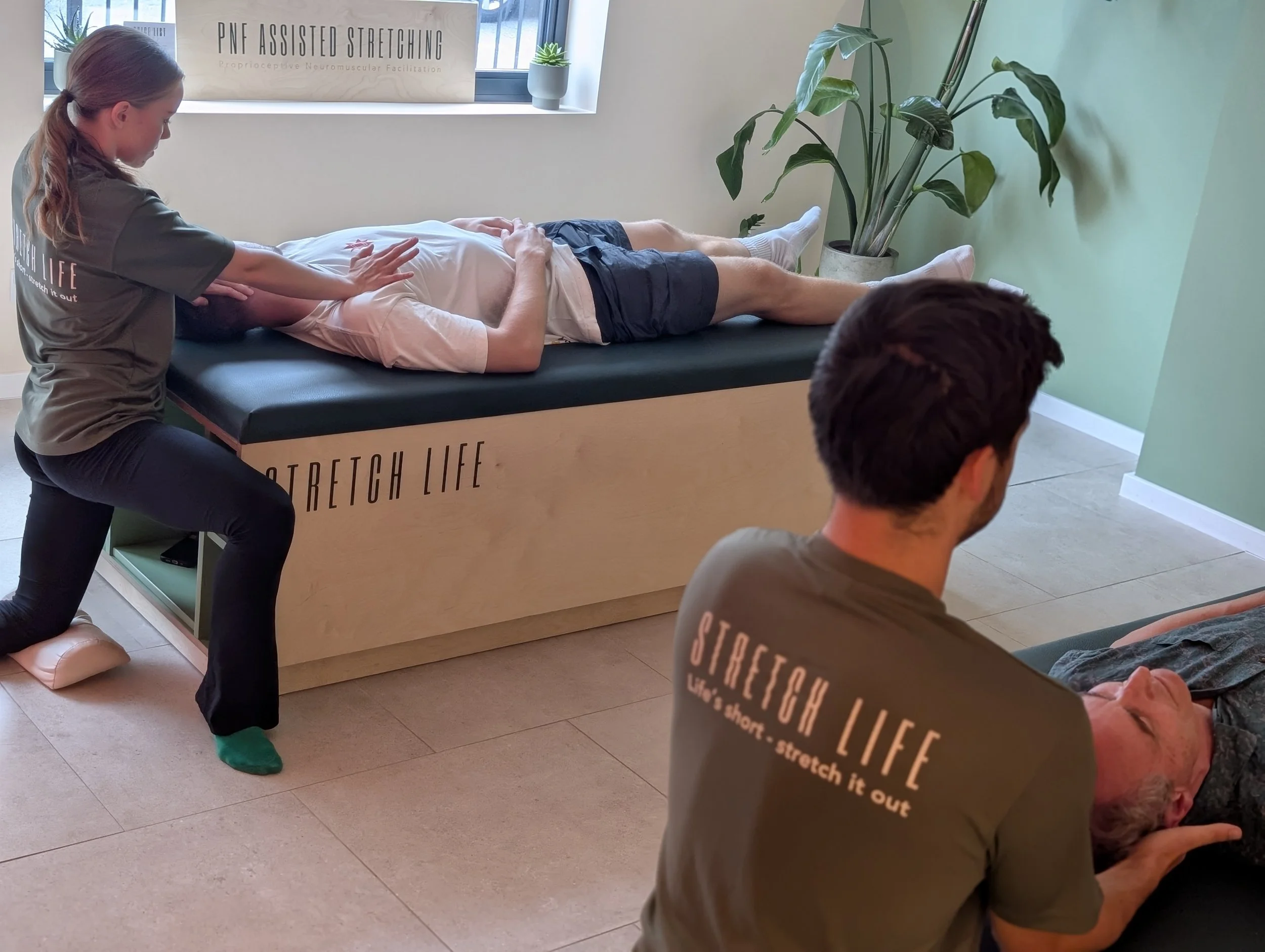
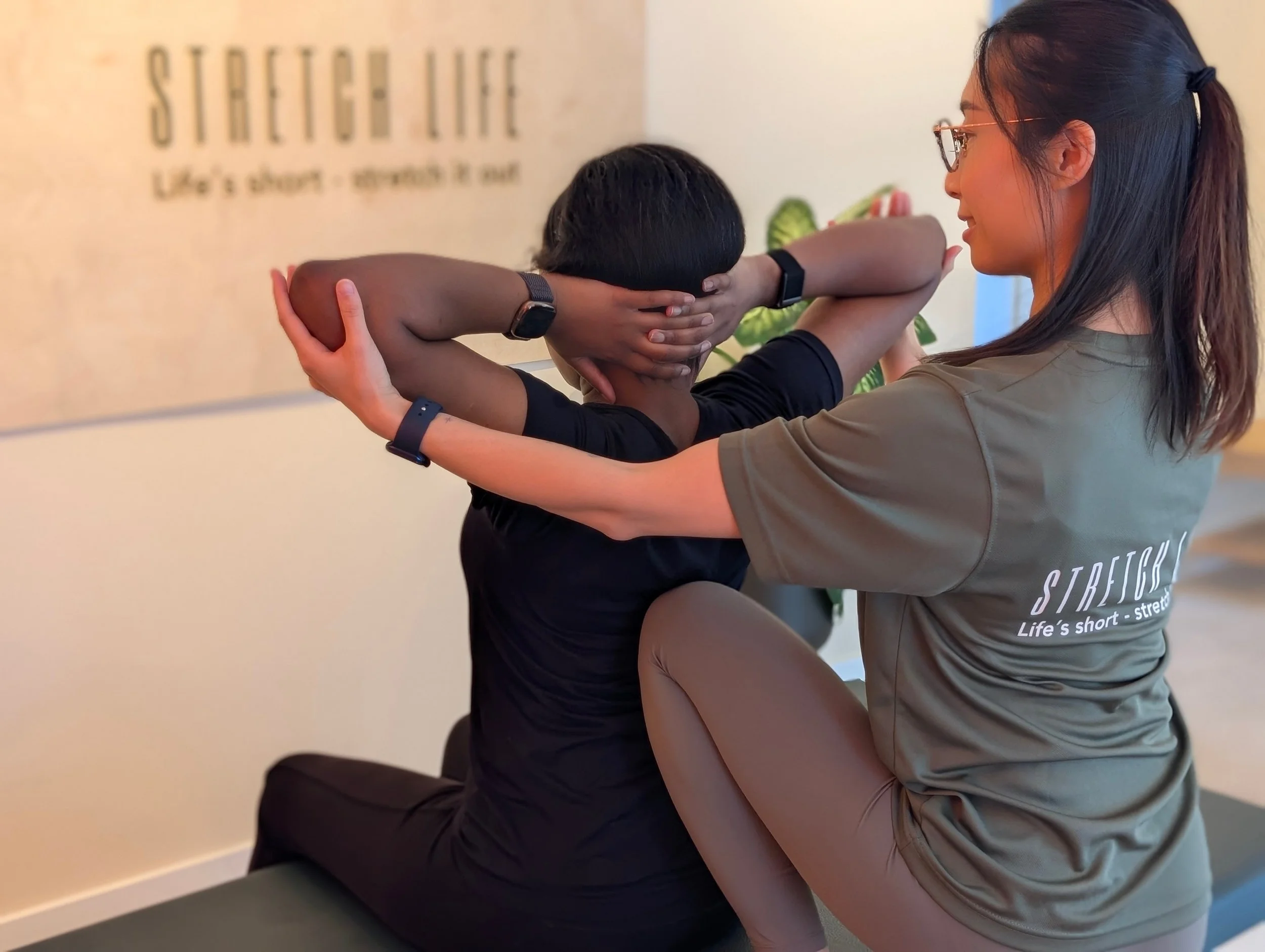
Neck and shoulder pain is often down to tight, overworked muscles, and a 25 minute PNF assisted stretch can ease it quickly. In this one-to-one session, a trained Stretch Life therapist uses PNF (proprioceptive neuromuscular facilitation) to relieve neck and shoulder tension, ease tension headaches and help you move more freely for longer. It costs £45 and is available at our studios in Islington, Kings Cross and Waterloo.
It’s pain free, powerful and built for results.
does this sound like your neck & shoulders?
You finish the working day with tight shoulders that are up by your ears.
Your neck feels stiff when you look from side to side or down to look at your phone.
You get a tension headache that starts at the base of your skull and builds through the day.
You carry tension in your upper back after sitting at a desk, training, travelling or looking after small children.
You have tried massage and it felt good for a day, but the tightness came back.
The neck and shoulders are one of the most common places people hold tension. Long hours at a desk, stress, poor sleep or ‘slept funny’ neck positions, carrying a heavy bag or a toddler and screen time all keep the muscles around the neck and upper back switched on in tense mode. Over time they shorten, tighten and tense and start to limit how freely you can move. Often you get used to that tightness but it doesn’t have to feel like that.This dedicated neck and shoulder assisted stretch session is designed for exactly that area.
what to expect in the 25 minute stretch
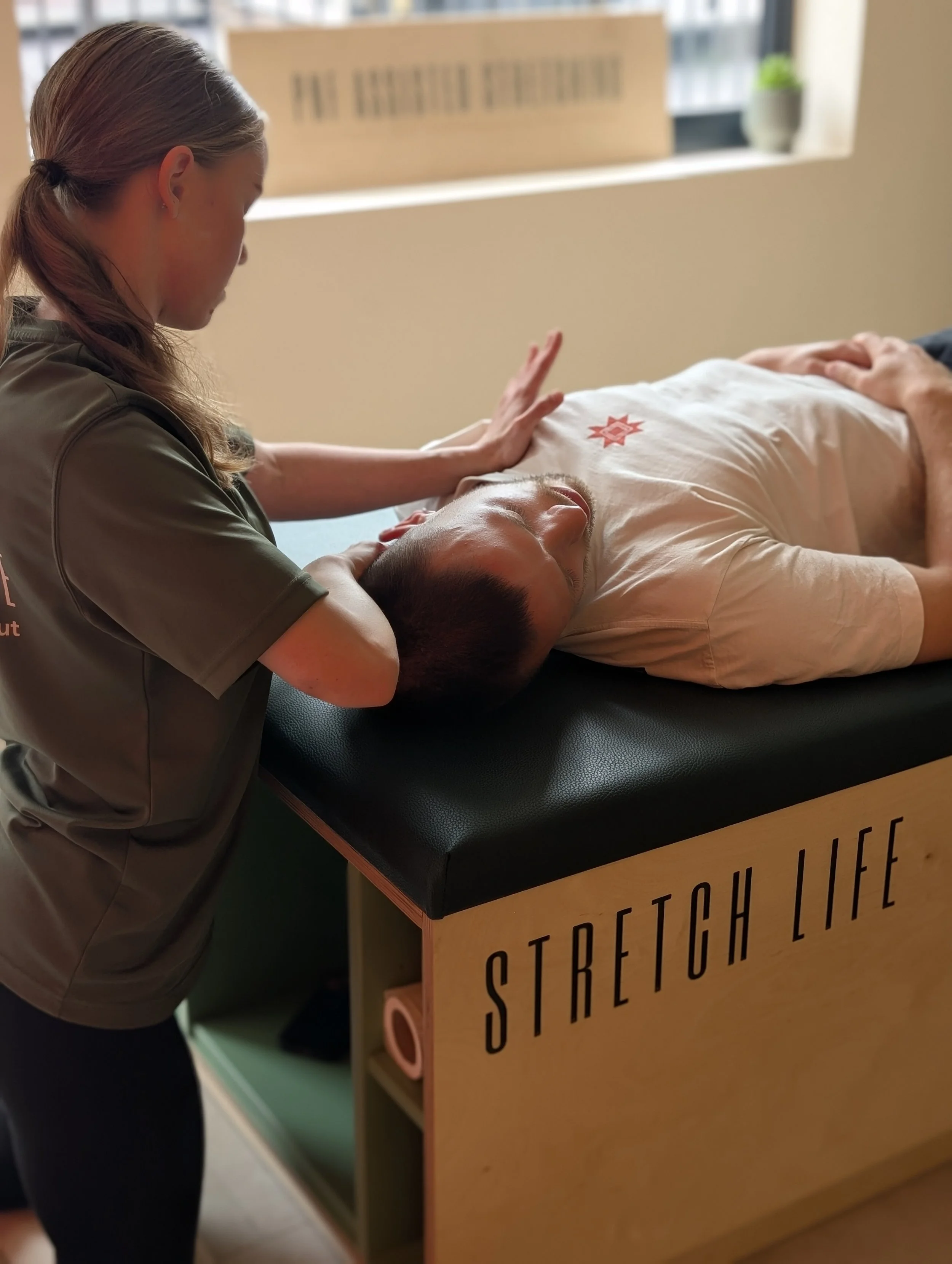
You stay fully clothed (no special clothes needed) and relaxed on one of our comfortable, bespoke stretch beds. Your Stretch Life therapist guides your body through a pain-free series of targeted and relaxing neck, shoulder and upper back stretches, one-to-one, tailored for exactly what your body needs.
Have a brief chat. Your therapist will ask about your typical day and where and how you’re feeling the tension to help shape how the session will go
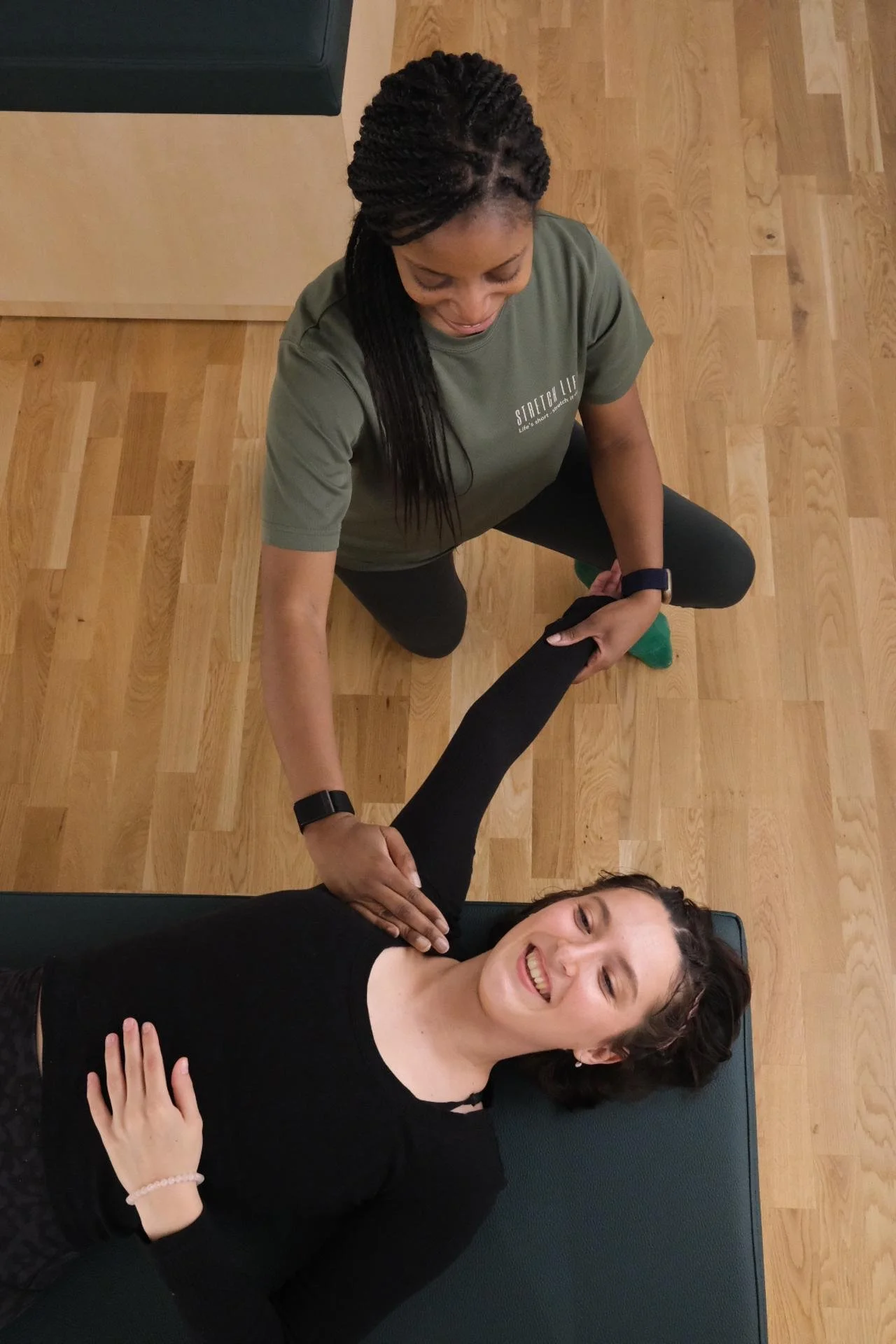
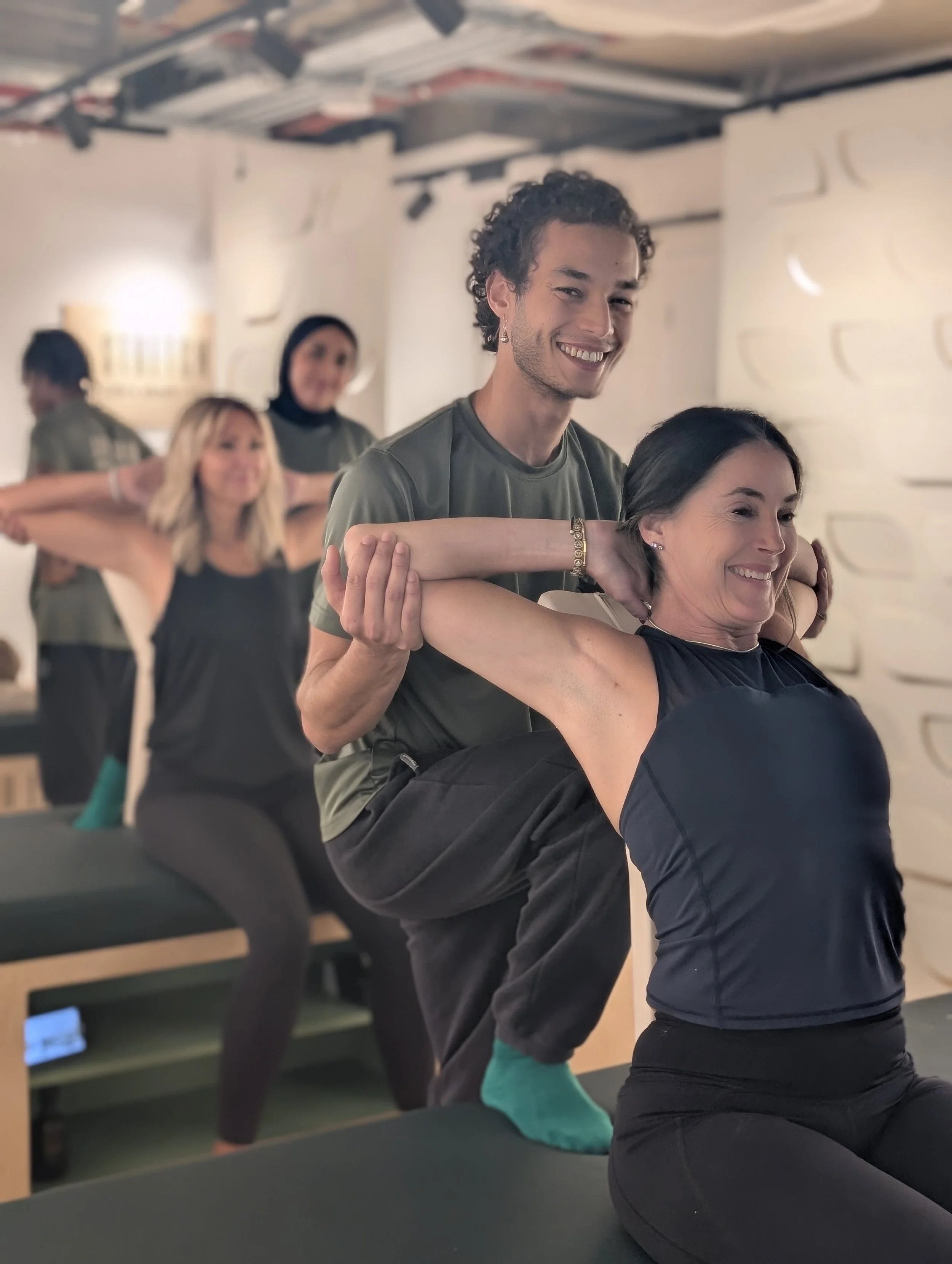
Gentle, pain-free stretching. You relax and your therapist will do all the work, moving your upper body into deeper ranges of motion to ease pain and tension. Pain-free and comfortable throughout.
Feel ease after the stretch. Most people notice they can turn their head more easily, their shoulders drop and there is more space and freedom in their neck and upper back area at the end of the session. Chronic neck pain will typically need more than one session but you can expect to feel ease.
Take-home advice. Your therapist can suggest simple things to do at your desk or at home to help you hold on to the gains between sessions.
“ I was honestly blown away. I walked in with a tension headache and a really sore neck, and left feeling so much better. She instantly knew where the tightness was coming from and worked on it with so much skill and care. Even after just one session, my mobility improved and the heaviness I’d been carrying eased massively. If this is how good I feel after one treatment, I can’t wait to see the results after a few more. Highly recommend”
Jamie, Waterloo Studio
what is pnf assisted stretching?
PNF stands for proprioceptive neuromuscular facilitation. It is a way of assisted stretching that works with your nervous system as well as your muscles.
When a muscle is pulled to its limit, your nervous system triggers a protective reflex that tightens it again. That is why pushing harder into a stretch on your own often does not get you very far, and can be uncomfortable and sometimes dangerous as it can cause tears and injury. PNF connects the nervous system to the muscular system to calm the nervous system, send a safety signal that allows the muscles to lengthen further without pain and without the risk of overstretching.
PNF was developed by neurophysiologists and physiotherapists in the 1940s and 1950s. It has more than 70 years of use in clinical rehabilitation, including with people recovering from conditions that affect movement and the nervous system, and with elite athletes. It is a technique you cannot do properly on your own, because it relies on a trained person guiding the movement and resistance.

“One session at Stretch Life and my chronic neck pain, caused by too much computer time, was gone!”
Katie, Islington Studio
how pnf helps with neck pain, shoulder tension, headaches and migraine
Neck and shoulder tightness. Tight muscles around the neck, shoulders and upper back limit movement and can feel sore, tight or achy. PNF lengthens these muscles through a deeper range than you can reach alone, which can ease stiffness and restore freedom of movement.
Tension headaches. Many tension-type headaches are linked to tightness in the neck and the muscles at the base of the skull. Easing that tension can help reduce how often these headaches build and how strongly you feel them. This stretch is especially helpful for migraine sufferers.
A calmer nervous system. Because PNF works with your nervous system, many clients feel much calmer and deeply relaxed afterwards, and they sleep better. When your body is less braced for stress, your neck and shoulders have a chance to let go.
Lasting change, not just a good feeling. PNF helps your body become familiar with its new range of movement, so gains build on each other over time rather than fading by the next day like they do with other forms of assisted stretching or a massage.
One session can make a noticeable difference.
Regular sessions are what make it last.
Muscles hold on to a new range of movement for a limited time, which is why we recommend a Neck and Shoulder Stretch every one to two weeks if you spend your days at a desk, train regularly or tend to carry tension. Think of it in the same way as looking after your teeth or your sleep: a small, regular input that protects how you feel and move in the long term, especially if you are someone who has a stressful job or lifestyle that causes tension and tightness in this area.
Your therapist will get to know your body, track how you are progressing, what your body needs and when and will help design the rhythm of sessions that suit your needs and budget.
frequently asked questions
-
Gentle movement, a little heat and easing off whatever set the tension off, such as long periods at a screen, often help first. For tight muscles, a PNF assisted stretch is a quick option, because it lengthens them through a deeper range than you can reach alone, and many people feel the difference in one session.
-
Often it is tight, overworked muscles. Long hours at a desk or on a phone, stress, poor sleep, carrying a heavy bag, lifting and training can all keep these muscles switched on until they ache. Pain that follows an injury, or that comes with other symptoms, needs checking by a doctor.
-
Muscular tension often settles within a few days to a few weeks, depending on what is causing it. Regular PNF sessions can help it stay away by building a new, easier range of movement. If pain lasts longer than a few weeks, or keeps coming back, see your GP or a physiotherapist.
-
Get medical advice promptly if neck pain follows a fall or accident, or comes with numbness, tingling or weakness in your arms or hands, a high temperature, a stiff neck with a severe headache, chest pain, or trouble with balance or walking. Call 999 or go to A&E if symptoms are sudden or severe. Your therapist will ask about your health at the start of your session.
-
The session is 25 minutes and costs £45. Book our specialist neck and shoulder stretch online to secure your appointment.
-
No. PNF assisted stretching is designed to be pain free during and after the session. You are in control throughout, and your therapist adjusts the stretch to what feels comfortable for you.
-
Short answer is probably not. You will feel ease after one 25 minute session and your whole upper body will feel freer but for lasting results, a few more regular sessions may be needed if you have had ongoing long term neck pain. If you put your body back in the same positions again straight away such as sitting for long periods at a desk, you should also think about more regular weekly or every other week session to ensure that the pain stays away as we can train your nervous system with the PNF to stay more open for longer, avoiding a repeat of chronic pains.
If your body hasn’t been stretched or moved much recently, we will take it very gently on the first session to get your nervous system engaged which in turn will support your muscles letting go to elongate and strengthen your body against pain.
We recommend coming in weekly if you have persistent neck or shoulder or upper back pain for 3-6 sessions (we can’t be more specific than that as everyone responds differently as bodies are unique) although after that, typically people will find that their nervous system engages and relaxes to hold the pain at bay for longer. Once that has been achieved you can drop your frequency down to every 2 weeks to maintain your freedom of movement.
With PNF assisted stretching, we’re creating a ‘muscle memory’ that retains the flexibility and freedom of movement for the long term. Everyone’s body is unique so some people respond very quickly to creating the ‘memory’ and find ease fast, others take more time to hold the pain at bay in between sessions and need more time to ease out pain that may have been present for a long time.Consistency is important as with all recovery and the best bit about PNF assisted stretching is that it’s effortless for you and relaxing.
Whatever your body reaction, we guarantee you’ll reach greater ranges of motion every stretch, giving you more freedom of movement in your neck, shoulders and upper back every time. -
Massage works on the muscle tissue itself. PNF assisted stretching works with your nervous system and your muscles together, taking you into a deeper range of movement than you could reach alone. Many clients enjoy both, but PNF is the one that helps your body hold on to more movement.
-
No. With the neck and shoulder stretch you can wear any clothing, even a skirt or dress is fine but if you can, we recommend coming along in something comfortable that you can move in. You stay fully clothed. We do not use oils or anything on your body.
-
Some health insurance policies will cover alternative therapies so do check with them if you can claim for PNF assisted stretching.
It’s worth noting that BUPA typically does not cover this as they are typically quite restricted but you may find other policies will.
Please note that all bookings must be paid for in advance of the session by credit or debit card. We do not administer claim backs through insurance policies so you would have to organise a claim yourself using our invoice.
Please note that dedicated PNF assisted stretching is not considered ‘physio’ under UK health insurance policies. -
Yes, it can help with tension-type headaches that are connected to tightness in the neck and shoulders. It’s also effective for migraine sufferers. If you have sudden, severe or unusual headaches, or headaches with other symptoms such as tingling in your limbs, please see your GP first.

get neck and shoulder pain relief now
Take your first step toward a pain-free neck, shoulder and upper back with a 25 min targeted stretch, designed for what your body needs.
Life’s short - stretch it out